UK Travellers to the USA, Central and South America: Entry Rules for 2026
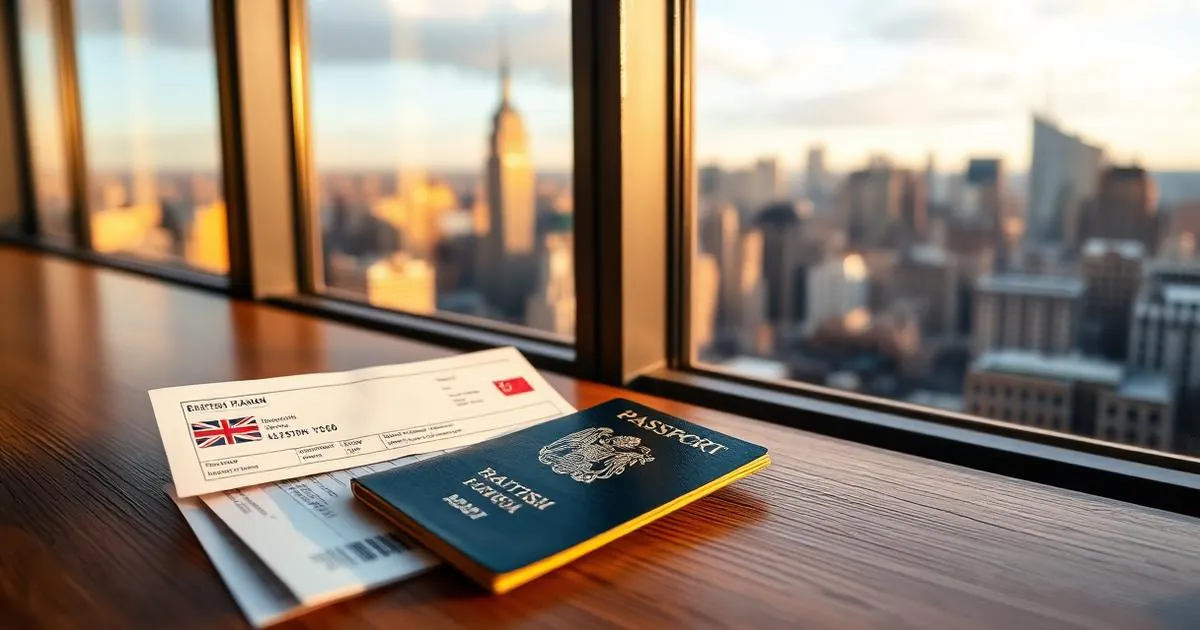
Flying west from the UK is rarely just "book and go" any more. The United States runs a pre-travel authorisation system with a fee that has doubled, and the countries beyond it — Mexico, Central America, the Caribbean and South America — each set their own rules on passport validity, onward tickets, tourist cards and vaccination certificates.
This guide covers what a British citizen passport holder needs to check before departure, and where to verify it officially.
The United States: ESTA under the Visa Waiver Program
The UK participates in the US Visa Waiver Program (VWP), so most British citizens travelling for tourism, business or transit do not need a visa. Instead you need an approved ESTA (Electronic System for Travel Authorization) before you board.
| Item | Detail |
|---|---|
| Who needs it | British citizens travelling visa-free for tourism, business or transit |
| Where to apply | esta.cbp.dhs.gov — the only official site |
| Fee | US$40 since 30 September 2025 (previously US$21) |
| Validity | Normally two years, or until your passport expires — whichever is sooner |
| Stay permitted | Up to 90 days per entry |
| When to apply | As early as possible; CBP advises at least 72 hours before travel |
Points that catch British travellers out:
- A new passport means a new ESTA. The authorisation is tied to the passport in which it was issued.
- Dual nationality and past travel matter. Travel to, or nationality of, certain countries can make you ineligible for ESTA and require a B-1/B-2 visa from the US Embassy in London instead.
- 90 days is a hard limit under the VWP. You cannot extend a visa-waiver stay or change status inside the US in the normal way.
- Commercial "ESTA" sites charge a markup. The US$40 fee is the whole cost on the official CBP site. Anything higher is a reseller.
If you are refused an ESTA, that is not a visa refusal — it means you must apply for a visa through travel.state.gov.
Transiting the US on the way south
There is no sterile international transit in the United States. Even if you are only changing planes in Miami, Atlanta or Houston en route to Bogotá or Lima, you must clear US immigration and customs — which means you need an ESTA or a US visa, and you must collect and recheck your bags. Build at least three hours into the connection.
Central America, the Caribbean and South America
British citizens travel visa-free to most of the region for short tourist stays, but "visa-free" does not mean "no paperwork". The recurring requirements are:
- Passport validity. Some countries require six months' validity beyond arrival; others only require validity for the stay. Check per country.
- Proof of onward or return travel. Routinely requested at check-in in Latin America; airlines can refuse boarding without it.
- Tourist cards and online forms. Several destinations use a paid tourist card or an online entry/health form completed before arrival (Cuba's tourist card is the best-known example).
- Yellow fever certificates. Required by some countries if you are arriving from, or have recently transited, a country with risk of yellow fever transmission — this catches travellers routing through Brazil, Peru, Bolivia or Colombia. Check NHS Travel Health Pro well before departure, as the certificate is only valid ten days after vaccination.
- Travel insurance proof. Required on entry by some destinations.
- Reciprocity or entry fees. Payable on arrival in some countries.
The authoritative, country-by-country source for British passport holders is the FCDO's foreign travel advice — one page per destination, updated continuously:
- Brazil entry requirements
- Costa Rica entry requirements
- Cuba entry requirements
- Bolivia entry requirements
- All FCDO travel advice
Rules change without much warning, so check the relevant FCDO page again in the week before you fly, not just when you book.
A realistic pre-departure checklist
- Passport valid well beyond your return date — six months is the safe benchmark for the region.
- ESTA approved and matched to the passport you are actually carrying.
- Onward or return ticket booked and printable.
- Any tourist card, entry form or insurance proof the destination requires.
- Vaccination certificates, including yellow fever if your route requires one.
- Copies stored offline — border wifi is not a plan.
The part nobody plans for: arriving able to function
A London to Santiago or London to Lima itinerary is 14–20 hours door to door, often with a US connection, in cabin air held at very low humidity. Long flights, minimal drinking water, alcohol and coffee combine to leave most travellers arriving dehydrated on top of the time-zone shift — which is why so many people describe the first 48 hours as a write-off.
Fluid alone does not fully fix it: what is lost in transit is fluid and electrolytes. A TRAVELYTES™ FLIGHT stick in a bottle of water — one before departure, one in the air, one on arrival — replaces sodium, potassium and magnesium alongside the water, which is the practical way to land ready to clear immigration and stay awake for local bedtime.
Work out your own in-flight requirement with our fluid loss calculator, and read the flight hydration guide before a long westbound sector.
Related TRAVELYTES™ tools
- Passport checker — validity and entry rules by destination
- Schengen 90/180 calculator — for European legs of a longer trip
- ETIAS checker — the EU authorisation, when it goes live
- Flight status tracker — for tight US connections
This article summarises publicly available government guidance as of August 2026 and is not immigration advice. Always confirm requirements on the official government sites linked above before travelling.
Preparing for the trip itself? See the 12-hour flight hydration checklist for what to pack, and TRAVELYTES™ FLIGHT for the cabin leg.
TRAVELYTES™ HOLIDAY (One Too Many) — hot-climate and morning-after hydration in one travel formula. View product →