Travel hydration ingredients: what each one does and why it suits your journey
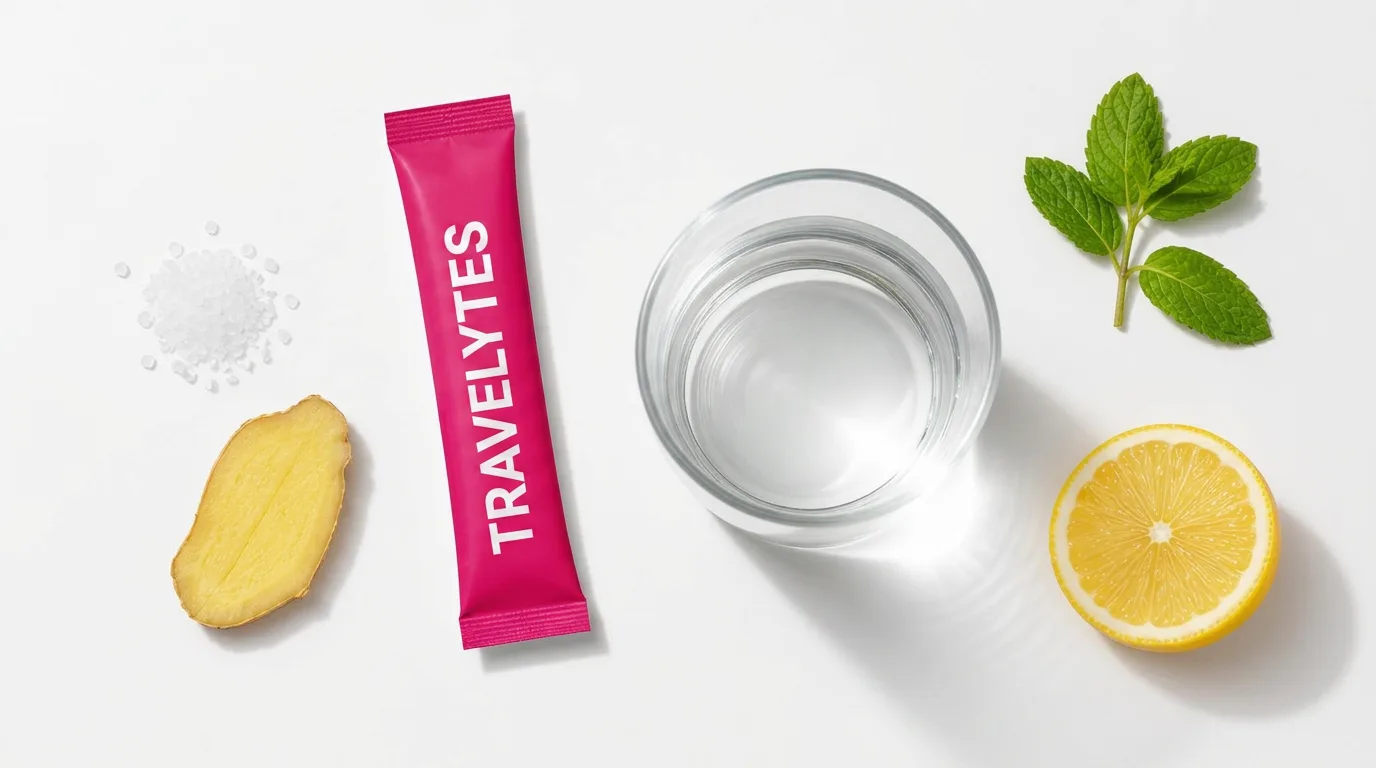
Every TRAVELYTES™ formula is built around the same question: what does this travel environment actually take out of you, and which ingredients are permitted to support it? Below is a single reference list — each ingredient appears once, with what it supports and the travel scenario it is included for.
The ingredient reference table
| Ingredient | What it supports | Why it suits the travel environment |
|---|---|---|
| Sodium | Hydration and fluid balance; drives water absorption in the small intestine and replaces electrolytes lost through increased fluid loss | The core of every formula. Dry cabin air, hot-climate sweating and long transit days all increase fluid loss, and water alone is absorbed less efficiently without sodium. |
| Potassium | Electrolyte balance, normal muscle function and nerve function; balances sodium | Long periods seated on aircraft, coaches and cruise decks are where muscle comfort matters, and potassium works alongside sodium rather than in place of it. |
| Magnesium (including magnesium glycinate) | Electrolyte balance, muscle function and relaxation, energy metabolism, and reduction of tiredness and fatigue | Travel days are long and broken. Magnesium links the hydration side of a formula to the tiredness-and-fatigue side. The glycinate form is used where gentleness on the stomach matters. |
| Calcium (including calcium citrate) | Normal muscle function, muscle and nerve conduction, and electrolyte balance; may reduce cramping | Included in the formulas built for extended sitting and walking-heavy travel days, such as flights followed by airport transfers or shore excursions. |
| Glucose | Rapid uptake of sodium and water; provides carbohydrate | A small amount of glucose is functional, not a sweetener: the sodium–glucose route is how the body moves water across the gut wall quickly. |
| Vitamin C | Normal energy metabolism, reduced tiredness and fatigue, protection of cells from oxidative stress, and immune support | Relevant across every scenario — long flights, hot-climate holidays and cruise weeks are all high-exposure, low-routine environments. |
| Vitamin B1 (thiamine) | Normal energy-yielding metabolism | Part of the B-group block supporting how the body releases energy from food during disrupted eating patterns on travel days. |
| Vitamin B2 (riboflavin) | Energy metabolism and reduced tiredness and fatigue | Included where the formula is aimed at arrival-day tiredness rather than sport recovery. |
| Vitamin B3 (niacin) | Energy metabolism | Completes the B-group in the formulas targeting long journeys and back-to-back travel days. |
| Vitamin B6 | Normal energy metabolism and reduction of tiredness and fatigue | One of the two B vitamins carried in every formula, because tiredness is the most common travel complaint. |
| Vitamin B12 | Energy metabolism and reduction of tiredness and fatigue | Works with B6 across the range; particularly relevant on time-zone-shifting itineraries where routine collapses. |
| Zinc | Protection of cells from oxidative stress and immune support | Included in the hot-climate and high-exposure formulas, where travellers are in shared spaces and unfamiliar conditions for days at a time. |
| Selenium | Protection of cells from oxidative stress | Paired with zinc and vitamin C in the hot-climate formula. |
| Choline | Normal lipid metabolism and maintenance of normal liver function | Specific to the hot-climate and morning-after occasion, where richer food and drink are part of the holiday pattern. |
| Ginger extract | Stomach comfort and digestive comfort | The motion-related reality of being at sea, on a coach transfer or in turbulence. Ginger is the most travel-specific ingredient in the range. |
| Artichoke extract | Digestion | Built for the cruise occasion: richer food, fuller stomachs and multi-course days. |
| Peppermint extract | Digestive comfort | Complements ginger and artichoke rather than repeating them, rounding out the digestive-comfort side of the cruise formula. |
How the ingredients map to travel environments
Air travel. Cabin air is very dry and journeys are sedentary. The priority is the sodium–glucose–potassium base for fluid uptake, magnesium and calcium for comfort during long periods seated, and the B-group plus vitamin C for tiredness and fatigue. See the flight hydration guide and long-haul flight hydration.
Ocean travel. At sea, hydration matters but digestive comfort matters just as much. That is where ginger, artichoke and peppermint sit — three ingredients doing three different jobs rather than three versions of the same one. See the cruise hydration guide and cruise excursion hydration.
Hot climates and heavy days. Heat and sweating increase fluid and electrolyte loss. Here the base electrolytes are joined by zinc, selenium and choline, plus vitamin C, for the oxidative-stress and richer-food side of a holiday week. See hot-climate travel hydration.
Business and back-to-back travel. Short flights, transfers, early starts and late finishes. The B-group and magnesium carry most of the load here, on top of the electrolyte base. See business travel hydration.
Frequently asked questions
Why is glucose in an electrolyte stick if it is not a sports drink? Glucose is included in a functional amount to support rapid uptake of sodium and water, not for sweetness or fuelling exercise. It is the mechanism that makes rehydration efficient.
Why does the cruise formula have ginger, artichoke and peppermint rather than just one of them? They support different parts of the same experience: ginger for stomach comfort and the motion-related challenges of being at sea, artichoke for digestion on richer-food days, and peppermint for general digestive comfort alongside the other two.
What is the difference between magnesium and magnesium glycinate? Both deliver magnesium, which supports electrolyte balance, muscle function, energy metabolism and the reduction of tiredness and fatigue. Glycinate is a gentler-on-the-stomach form used where that matters most on a travel day.
Why are several B vitamins used instead of one? Vitamins B1, B2, B3, B6 and B12 all support energy metabolism, and B2, B6 and B12 additionally support the reduction of tiredness and fatigue. Each formula carries the combination relevant to its scenario.
Do zinc and selenium do the same thing? Both help protect cells from oxidative stress, and zinc additionally supports immunity. They are included together only in the formulas built for hot-climate, high-exposure travel.
Why does choline appear in only one formula? Choline supports normal lipid metabolism and the maintenance of normal liver function, which fits the hot-climate and morning-after occasion rather than a standard flight.
Are these medical claims? No. These are permitted nutrition and health claim descriptions relating to the role of nutrients in the body. TRAVELYTES™ products are food supplements and are not intended to diagnose, treat, cure or prevent any condition.
Compare the full formulas on the travel hydration hub, or check the per-product nutritional tables on each product page.
TRAVELYTES™ HOLIDAY (One Too Many) — hot-climate and morning-after hydration in one travel formula. View product →