How to Avoid Travel Dehydration: An Evidence-Based Traveller's Guide
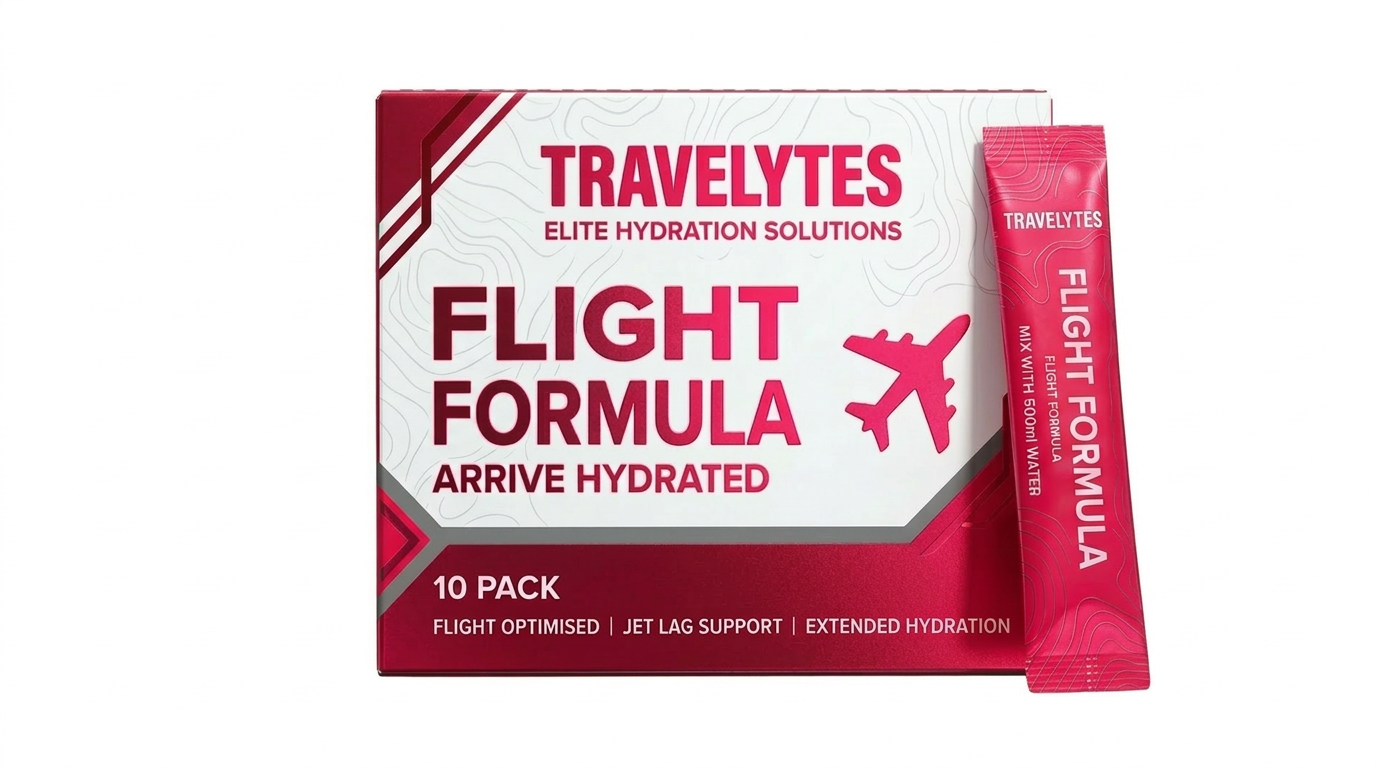
Travel Dehydration also known as Jet lag is the temporary mismatch between your body clock (circadian rhythm) and the local time at your destination. It is not an illness — it''s a normal physiological response to crossing time zones quickly. The good news: with a few evidence-based habits before, during and after your flight, most travellers can reduce how long it lingers.
This article is general information about travel and circadian health. It is not medical advice and does not describe a treatment for any condition. If you have a sleep disorder or take medication, speak to your GP or pharmacist before changing your routine.
What causes jet lag?
Your suprachiasmatic nucleus — a small region of the hypothalamus — sets the body''s 24-hour rhythm using light as its primary cue. When you fly across several time zones, that internal clock takes time to realign with the new light–dark cycle at your destination. The result can include daytime sleepiness, broken sleep at night, low mood, reduced concentration, mild digestive upset and a general "off" feeling.
As a rough rule, your circadian rhythm shifts roughly one time zone per day on its own. Eastward travel is usually harder than westward travel because your day is shortened rather than lengthened.
Before you fly
- Shift your sleep schedule gradually. Two or three days before departure, move your bedtime and wake time 30–60 minutes closer to your destination''s schedule each day.
- Plan your light exposure. For eastward flights, seek morning light and avoid bright light in the evening. For westward flights, do the opposite.
- Arrive well-rested. Don''t board sleep-deprived — it amplifies how rough the first 48 hours feel.
- Pre-hydrate. Cabin air is dry (typically below 20% relative humidity), so start your trip well-hydrated rather than playing catch-up at altitude.
On the plane
- Set your watch to destination time at the gate. Eat and sleep on the cabin schedule that matches your destination, not your origin.
- Sleep strategically. If it''s night-time at your destination, try to sleep. If it''s daytime, stay awake — read, watch films, walk the aisle.
- Move every couple of hours. Short walks and ankle rotations support circulation on long sectors.
- Go easy on alcohol and caffeine. Both interfere with sleep and add to fluid losses.
- Drink water regularly. A useful guideline used by aviation health resources is around 250 ml of water per hour of flight. Electrolytes (sodium, potassium, magnesium) help the body retain and use that fluid effectively, which is why many frequent flyers add an electrolyte drink to their in-flight routine. TRAVELYTES™ FLIGHT is a low-sugar electrolyte stick designed to be used this way during any flight — it''s a hydration product, not a remedy for jet lag.
When you land
- Get outside. Natural daylight is the single strongest signal for resetting your body clock. Aim for at least 30 minutes of outdoor light at the right time of day for the direction you''ve travelled.
- Eat on local time. Three meals at local breakfast, lunch and dinner times help anchor your rhythm.
- Keep moving. Light exercise — a walk, a swim, a short gym session — helps push back the urge to nap at the wrong hour.
- Limit long daytime naps. If you must nap, keep it to 20–30 minutes before mid-afternoon.
- Stay hydrated. Continue drinking water through the first 24–48 hours after arrival; cabin dehydration doesn''t resolve the moment you step off the aircraft.
Eastward vs westward: which is harder?
Most travellers find eastward flights (for example, London → Singapore, or New York → London) harder. You''re asking your body to fall asleep earlier than its current rhythm allows. Westward travel extends your day, which most people tolerate more easily because staying up later is generally easier than falling asleep earlier.
How long does jet lag last?
It varies by person, age, direction of travel and number of time zones crossed. A common rule of thumb is one day of adjustment per time zone for eastward travel and slightly faster for westward travel. Good light exposure, consistent meal timing and adequate hydration tend to speed the process up; alcohol, irregular sleep and staying indoors slow it down.
What about supplements?
Some travellers use melatonin to support sleep timing when crossing multiple time zones; in the UK it is a prescription medicine, so speak to a pharmacist or GP. Electrolyte drinks and oral rehydration products support hydration but are not treatments for jet lag — claims to the contrary are not permitted under UK ASA and US FTC/FDA advertising standards, and we don''t make them.
The TRAVELYTES™ approach
We make low-sugar electrolyte sticks formulated for travellers. FLIGHT is designed for in-flight hydration. CRUISE is formulated for warm-climate and at-sea travel. MAX adds 80 mg of caffeine for travellers who want a hydration option with an alertness boost on long, early or jet-lagged days. All three are food supplements, not medicines, and are intended to support normal hydration alongside the lifestyle habits described above.
Quick checklist
- Shift sleep 2–3 days early
- Plan light exposure for the direction of travel
- Set your watch to destination time on boarding
- Around 250 ml of water per flight hour, plus electrolytes
- Limit alcohol and caffeine in-flight
- On arrival: daylight, local meal times, light movement, short naps only
Safe travels.
Short answer: Drink around 500ml before boarding, then roughly 250ml an hour in the air, add an electrolyte sachet every four to six hours, and keep alcohol and caffeine modest. Cabin humidity sits at 10-20%, so steady intake works better than one large drink.
Flying at 35,000 feet exposes your body to conditions that rapidly accelerate dehydration. Cabin humidity typically drops to just 10–20%, compared to the 30–65% you experience on the ground. Combined with cabin pressure changes and recycled air, your body loses moisture at a significantly faster rate than normal.
Why Flights Dehydrate You
The pressurised cabin environment creates several challenges for your body:
- Low humidity — moisture evaporates from your skin, eyes, and respiratory system much faster than at ground level
- Cabin pressure — equivalent to being at 6,000–8,000 feet altitude, which increases breathing rate and fluid loss
- Recycled air — the constant circulation of dry, filtered air strips moisture from your body
- Reduced movement — sitting for extended periods affects circulation and fluid distribution
Signs of In-Flight Dehydration
Watch for these common indicators during and after flights:
- Dry skin, lips, and eyes
- Headaches and fatigue
- Difficulty concentrating
- Muscle cramps and stiffness
- Increased jet lag symptoms
How to Stay Hydrated When Flying
Standard advice is to drink water regularly, but plain water alone may not be enough. During flights, your body loses electrolytes along with fluids, and replacing water without electrolytes can actually dilute the minerals your body needs to function properly.
Before Your Flight
Start hydrating 24 hours before departure. Avoid excessive alcohol and caffeine, which act as diuretics. Consider a travel-specific electrolyte formula designed for the conditions you will experience in the cabin.
During Your Flight
Aim to drink at least 250ml of fluid every hour. Electrolyte sachets formulated for cabin pressure conditions can help your body absorb and retain fluids more effectively than water alone. Avoid relying solely on tea, coffee, or alcohol for fluid intake.
After Landing
Continue hydrating for at least 24 hours after arrival. Your body needs time to rebalance, and proper hydration can significantly reduce the severity and duration of jet lag.
The Role of Electrolytes in Flight Hydration
Electrolytes — including sodium, potassium, and magnesium — are essential for fluid absorption and retention. Travel-specific electrolyte formulations take into account the unique conditions of air travel, including cabin pressure, low humidity, and circadian rhythm disruption, to provide targeted hydration support.
Products like TRAVELYTES™ FLIGHT are specifically formulated for these conditions, with ingredients selected to support hydration, support adjustment to a new time zone, and help travellers arrive feeling their best.
--- *This article is provided for educational purposes only and represents a general technical briefing on travel wellness. It is not medical advice and is not intended to diagnose, treat, cure or prevent any condition. TRAVELYTES™ products are food supplements; authorised health claims and formulations vary by region (UK/EU and USA). Individual results may vary. If you have any personal health concerns, please consult a qualified healthcare professional.* ## The Science of Electrolyte Absorption at Altitude: Why Regular Water Is Not EnoughShort answer: At cruising altitude, cabin humidity of 10-20% and reduced pressure increase steady fluid loss. Absorption relies on sodium and a small amount of glucose carrying water across the gut wall, so a balanced electrolyte drink behaves differently from plain water.
Most people assume that drinking more water is the solution to in-flight dehydration. While staying hydrated is certainly important, the science of fluid absorption at altitude reveals a more nuanced picture — and explains why electrolyte-enhanced hydration is significantly more effective than water alone.
How Altitude Affects Fluid Absorption
Commercial aircraft cabins are pressurised to simulate an altitude of approximately 6,000–8,000 feet. At this effective altitude, several physiological changes occur:
- Increased insensible water loss — you lose more moisture through breathing and skin evaporation without feeling it
- Altered kidney function — your kidneys adjust to the lower pressure environment, affecting fluid regulation
- Changes in blood volume distribution — fluid shifts towards your extremities, particularly in your legs
- Increased respiratory rate — your body compensates for lower oxygen partial pressure by breathing slightly faster, increasing moisture loss
The Sodium-Glucose Co-Transport Mechanism
The key to effective hydration lies in how your intestines absorb water. The sodium-glucose co-transport mechanism (SGLT1) is the most efficient pathway for fluid absorption in the human gut. When sodium and glucose are present in the right ratios, water absorption increases by up to 300% compared to plain water.
This is the same science behind oral rehydration solutions recommended by the World Health Organization, adapted specifically for the conditions of air travel.
Why Travel-Specific Formulations Matter
Generic electrolyte products are typically formulated for exercise or general daily use. Travel-specific formulations like TRAVELYTES™ FLIGHT take into account the unique conditions of cabin environments — including the need for sustained release over many hours, B-vitamins to support circadian rhythm adjustment, and mineral ratios optimised for the physiological stresses of altitude.
--- *This article is provided for educational purposes only and represents a general technical briefing on travel wellness. It is not medical advice and is not intended to diagnose, treat, cure or prevent any condition. TRAVELYTES™ products are food supplements; authorised health claims and formulations vary by region (UK/EU and USA). Individual results may vary. If you have any personal health concerns, please consult a qualified healthcare professional.* ## The Science of Travel Dehydration: Why Your Body Needs More Than WaterShort answer: Travel dehydration is fluid loss driven by cabin air at 10-20% humidity, pressure changes and long sedentary hours rather than by sweat. Water leaves through breathing and skin alongside sodium, potassium and magnesium, so plain water replaces only part of what is lost.
Travel Dehydration Is Not Like Exercise Dehydration
Most people understand that exercise causes dehydration through sweat. But travel dehydration operates through entirely different mechanisms — and requires a fundamentally different solution.
When you board an aircraft, your body faces a cascade of physiological stressors that no gym session replicates:
The Four Pillars of Travel Dehydration
1. Respiratory Water Loss
Aircraft cabins maintain humidity levels between 10–20%, compared to the 40–60% your body is accustomed to at sea level. With every breath, you lose moisture through your respiratory tract at two to three times the normal rate. Over a 10-hour flight, this alone can account for 500ml of water loss.
2. Transepidermal Evaporation
Your skin is your largest organ, and in low-humidity environments, it becomes a significant route of water loss. Studies in aviation medicine have measured transepidermal water loss (TEWL) increases of 37% in cabin conditions compared to ground-level environments.
3. Pressure-Induced Diuresis
The reduced cabin pressure (equivalent to 6,000–8,000 feet altitude) triggers a well-documented physiological response: increased urine production. Your kidneys respond to the pressure differential by excreting more fluid, compounding the dehydration effect.
4. Circadian Disruption
Crossing time zones disrupts your body's production of vasopressin, the antidiuretic hormone that regulates water retention. This means your body is less efficient at conserving water precisely when it is losing more of it.
Why Water Is Necessary But Insufficient
Drinking water during travel is essential, but it only addresses volume — not composition. The electrolytes lost through these mechanisms include:
- Sodium — critical for fluid retention and neural function
- Potassium — essential for muscle function and reducing cramping during long periods of sitting
- Magnesium — supports over 300 enzymatic processes and combats travel-induced stress
- Zinc — bolsters immune defence in high-exposure environments like aircraft cabins
Drinking large quantities of plain water without electrolyte replacement can actually worsen the situation by diluting plasma sodium levels — a condition called dilutional hyponatraemia.
The TRAVELYTES™ Approach
TRAVELYTES™ formulations are specifically designed to address the four pillars of travel dehydration with targeted mineral ratios, B-vitamins for energy metabolism, and vitamin C for immune support. Unlike generic sports electrolytes designed for sweat replacement, every ingredient serves a travel-specific purpose.
Understanding the science is the first step. Acting on it is what separates informed travellers — and the businesses that serve them — from the rest.
--- *This article is provided for educational purposes only and represents a general technical briefing on travel wellness. It is not medical advice and is not intended to diagnose, treat, cure or prevent any condition. TRAVELYTES™ products are food supplements; authorised health claims and formulations vary by region (UK/EU and USA). Individual results may vary. If you have any personal health concerns, please consult a qualified healthcare professional.* ## The "Invisible" Dehydration: Why Flights Feel DifferentYou board feeling fine. You land feeling like you've been wrung out. That post-flight fatigue, the scratchy eyes, the headache that arrives somewhere over the Atlantic — it's not just tiredness. It's dehydration, and it's happening whether you notice it or not.
The Desert Above the Clouds
Aircraft cabins are pressurised to simulate an altitude of around 6,000–8,000 feet. The humidity inside? A bone-dry 10–20%. For context, the Sahara Desert typically sits at around 25%. Every breath you take at cruising altitude draws moisture from your body — through your lungs, your skin, even your eyes.
Over a 10-hour flight, research suggests passengers can lose 1.5 to 2 litres of water through this invisible evaporation alone. And unlike exercise-induced sweating, there's no obvious trigger telling you to drink.
The Coffee Trap
Here's where it gets worse. Many of us start our journey with a coffee at the gate or a glass of something celebratory in the lounge. Both caffeine and alcohol act as diuretics, accelerating fluid loss at the exact moment your body needs to be conserving it.
That pre-flight flat white might feel like a ritual, but it's working against you before you've even found your seat.
It's Not Just Thirst — It's Your Skin and Eyes Too
Dehydration in-flight doesn't just make you thirsty. It affects your:
- Skin: Becomes tight, flaky, and more prone to irritation
- Eyes: Contact lens wearers often experience significant discomfort
- Nasal passages: Dry air can crack delicate membranes, increasing susceptibility to airborne germs
Packing saline nasal spray and preservative-free eye drops in your carry-on can make a real difference — but they're treating symptoms, not the root cause.
Why Water Alone Isn't Enough
Here's the part most people miss: simply drinking water doesn't guarantee your body absorbs it effectively. When you're sedentary for hours in a pressurised cabin, your body needs the right balance of electrolytes — sodium, potassium, magnesium — to actually transport that water into your cells.
Without those minerals, much of the water you drink passes straight through, giving you more trips to the cramped lavatory without meaningfully rehydrating you.
This is why travellers increasingly turn to electrolyte supplements specifically designed for the demands of air travel — formulations that account for the unique combination of low humidity, reduced air pressure, and prolonged inactivity.
The Bottom Line
Flight dehydration is real, it's significant, and it's largely invisible. Understanding the mechanics behind it is the first step to arriving feeling human. Start hydrating before you board, skip the diuretics, and make sure your body has the minerals it needs to actually use the water you're drinking.
--- *This article is provided for educational purposes only and represents a general technical briefing on travel wellness. It is not medical advice and is not intended to diagnose, treat, cure or prevent any condition. TRAVELYTES™ products are food supplements; authorised health claims and formulations vary by region (UK/EU and USA). Individual results may vary. If you have any personal health concerns, please consult a qualified healthcare professional.*TRAVELYTES™ HOLIDAY (One Too Many) — hot-climate and morning-after hydration in one travel formula. View product →